
Planning an ultra-precision optics process chain
Choosing and sequencing the processes that finish telescope optics.
Strategic Advisory · Plasma and surface processes
Choosing the right sequence of processes to finish telescope optics.
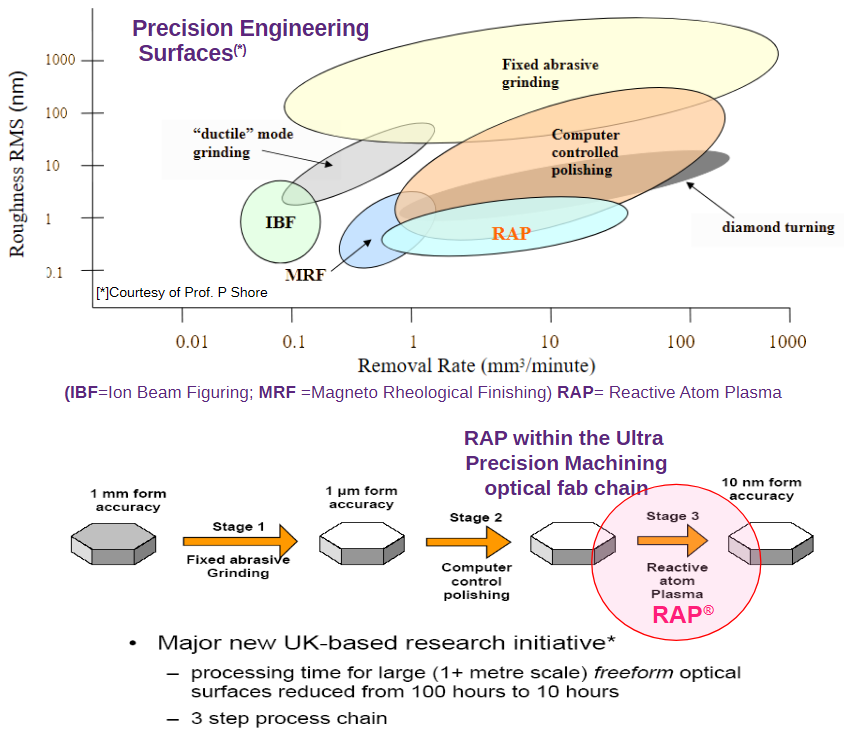
The process chain for ultra-precision optical surfaces includes several technological steps, from grinding to plasma figuring. The aim is high removal rates, compatible with large production yields, while keeping the surface features needed for telescope optics at the desired roughness.
In the UK research initiative behind this work, the processing time for large (1 m and larger) freeform optical surfaces was reduced from 100 hours to 10 hours, using a three-step process chain.
The machine behind the last step is shown on the RAP 300 page.
Weighing up a process route or a new technology? info@dataphysics.ae